Registering with your commune in Luxembourg: the arrival declaration explained
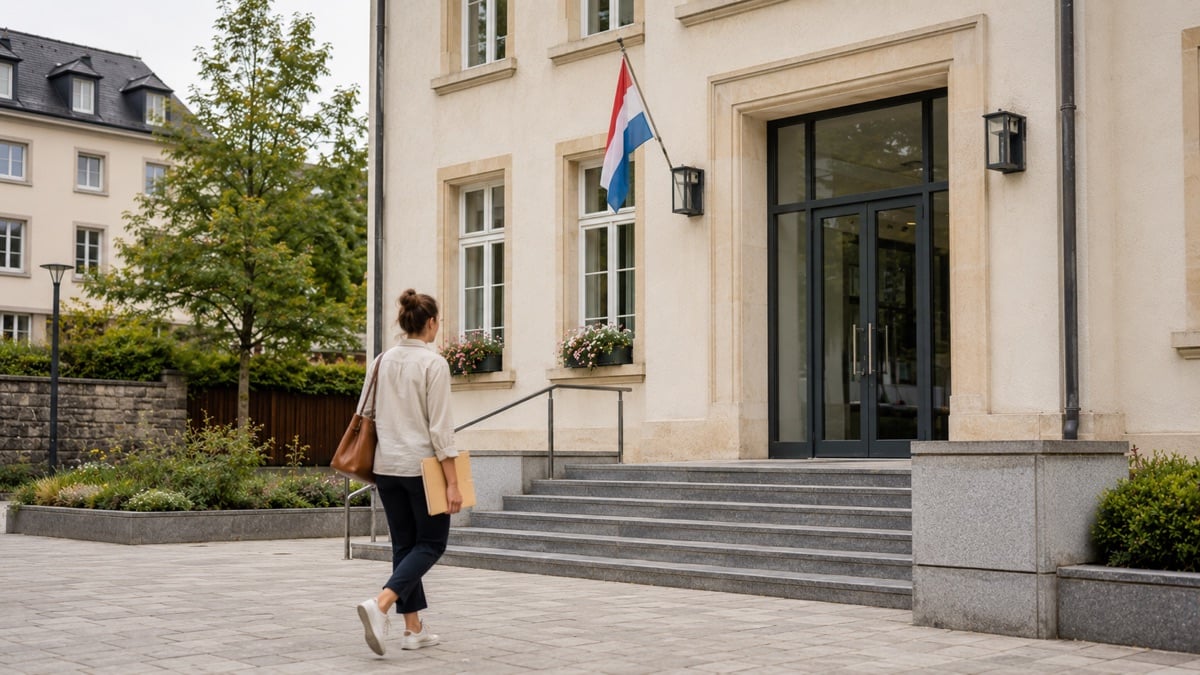
You have the keys, the room is yours, and someone tells you: go and register at the commune. Then the questions start. Which commune? By when? What paperwork? And what exactly do you show them when you rent one room in a shared house rather than a whole flat?
This comes up constantly in our inbox, so here is the practical version.
What it is, and why it is not optional
Every resident of Luxembourg must be registered at the population office (bureau de la population) of the commune where they actually live. This registration is what unlocks almost everything else: your tax card, your social security, a bank account in some cases, your certificat de résidence. It is the administrative anchor of your life here.
The deadline depends on where you come from
- Moving from another Luxembourg commune: declare yourself within 8 days of moving in.
- Arriving as a non-EU national: the arrival declaration is due within 3 days of entering the country.
- Arriving as an EU national: register when you settle; communes generally expect you within the first days. Do not let it drift.
One caveat worth taking seriously: Luxembourg communes are autonomous, and the details genuinely differ from one to the next. Check your own commune's page before you travel across town.
What to bring
- A valid ID card or passport for every person registering, children included.
- Proof of accommodation — this is the one people worry about. A lease, a notarial deed, or an accommodation certificate.
- Your residence permit if you are a non-EU national, plus your visa where applicable.
- A birth certificate, and a marriage certificate if relevant — some communes ask, some do not.
Go in person. This is not a formality you can delegate by email.
The shared-house question
Here is where our tenants get stuck. You are not renting a whole apartment — you rent one room, and three other people live in the same house. Is that enough for the commune?
Yes. Your rental agreement names you, the address and your room, and that is the document the population office is looking for. Several people registered at the same address is entirely normal in Luxembourg; the housing stock runs on it.
If your commune asks for something more specific — an accommodation certificate signed by the owner, for instance — tell us. We issue it. Do not argue at the counter and do not go home empty-handed: call the agency on 20 60 80 and we will send the document the same day, and speak to the commune directly if needed.
Two mistakes we see every month
Waiting for the "real" contract. Your signed agreement is the real contract. There is no better document coming later.
Registering at a friend's address. Tempting when you arrive, and a genuinely bad idea: your official address determines your commune, your taxes and your rights. Register where you sleep.
And when you leave
The same obligation applies in reverse: declare your departure. Leaving Luxembourg without deregistering leaves an administrative tail behind you — and tends to resurface at the worst moment, years later.
Full official details, commune by commune, are on guichet.public.lu.
Find your room in Luxembourg
792 furnished rooms, all bills included, no locked deposit. Book online in minutes.
See available rooms